HIE UND DA #001: MARTIN MOSCROP
Ein offenes Gespräch mit bekannten Persönlichkeiten. Eine Erkundung dessen, was war und was ist, über ihr Leben und ihren Stil, ihre Stadt und Kultur hinweg.


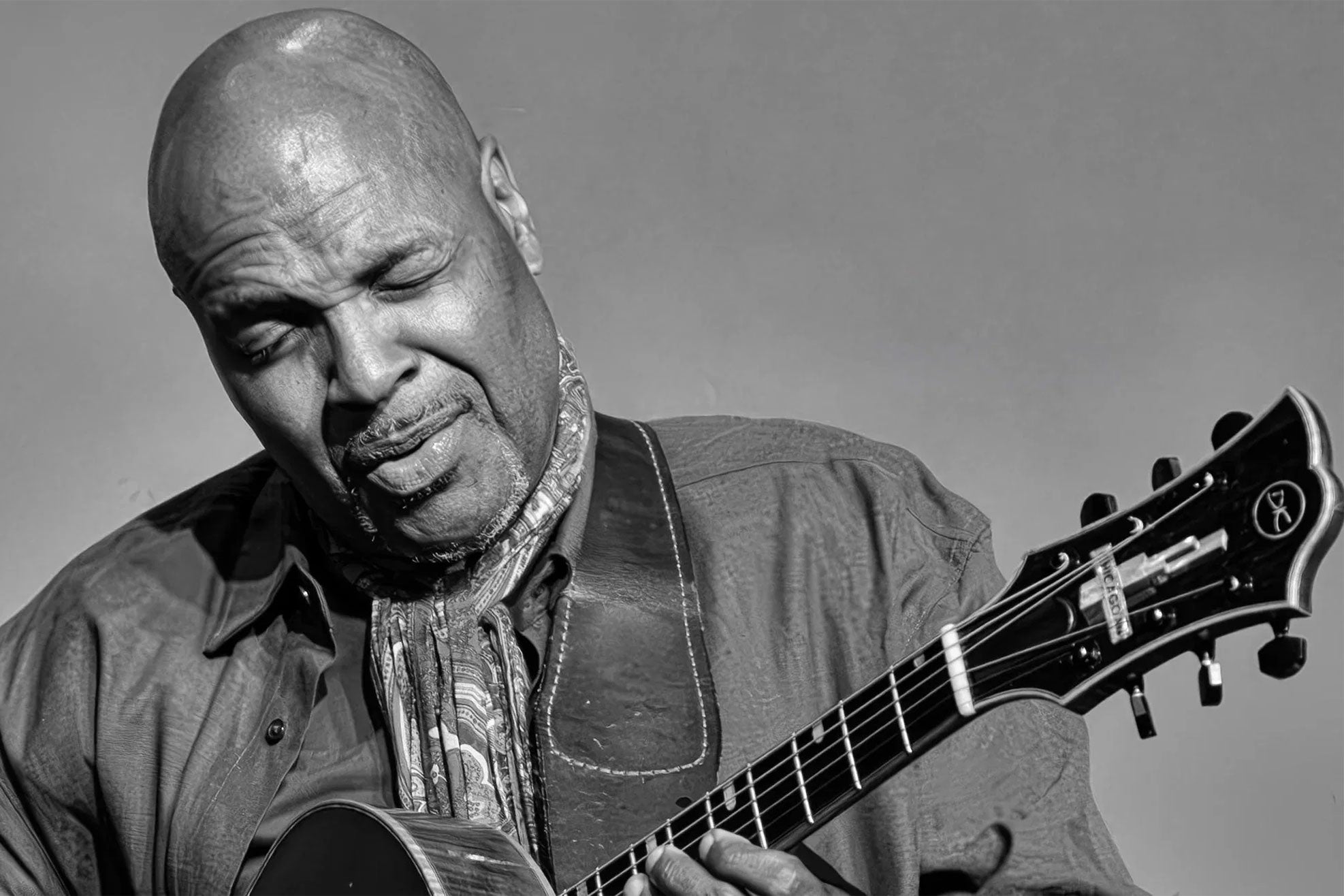
#001: Martin Moscrop. Gitarrist, A Certain Ratio
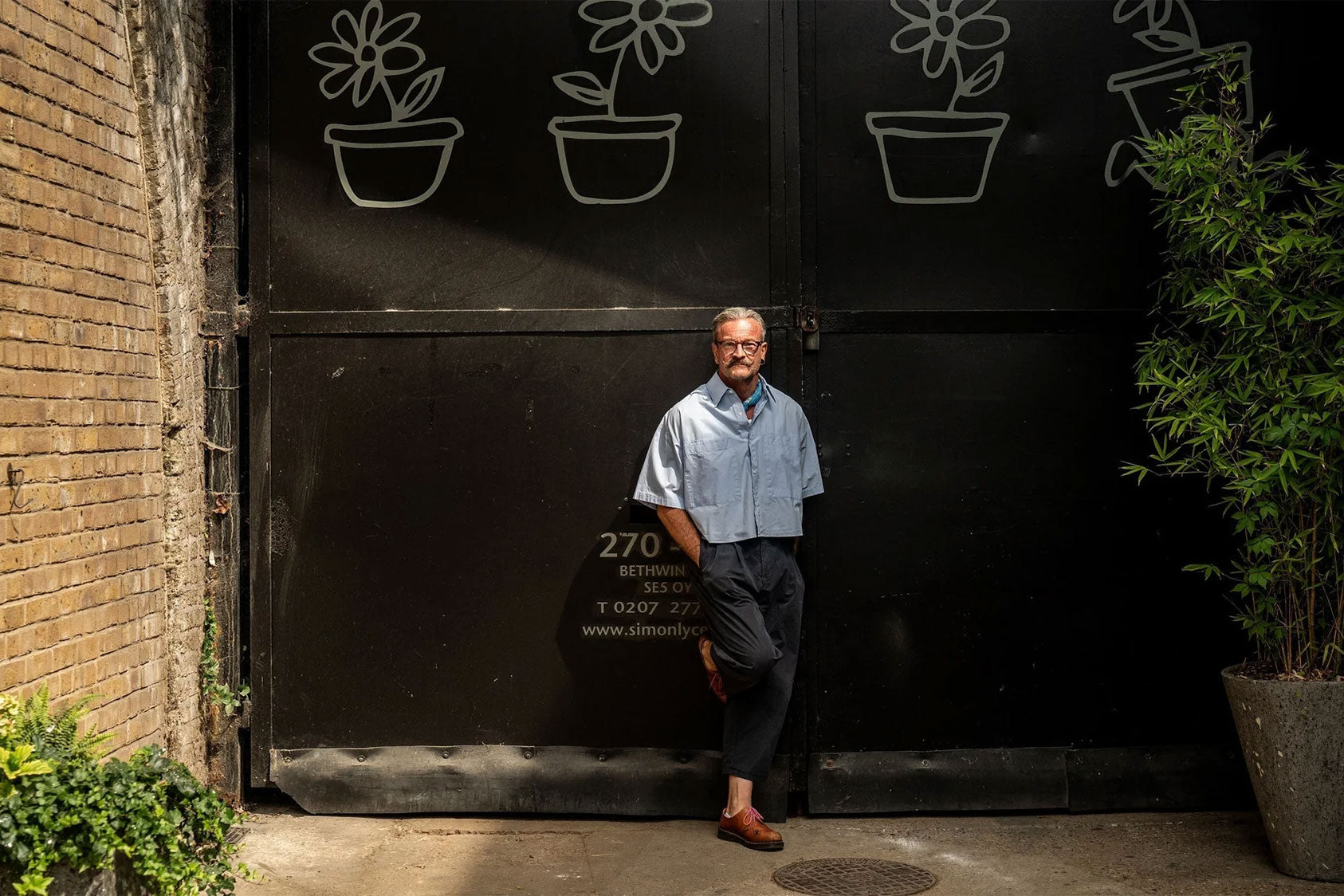
Es ist ein kühler, grauer Morgen in Manchester, als Martin Moscrop in den Sackville Gardens ankommt, unweit des Stadtzentrums. Die Gärten sind ein kleines Stück Grün, umrahmt von denkmalgeschützten roten Backsteingebäuden und der Canal Street, dem Zentrum der LGBTQ+-Gemeinschaft der Stadt. Wir treffen uns an der Alan-Turing-Statue mitten im Park, fünf Gehminuten vom Rest der Welt entfernt über Manchesters belebten Bahnhof Piccadilly Station.
„Dort drüben“, Martin deutet auf ein reich verziertes dreistöckiges Gebäude, „hat mein Vater nach dem Zweiten Weltkrieg Textilien studiert. Diese Bank stand vor meinem Bürofenster, als ich Campusleiter am Manchester College war.“
Er lenkt meine Aufmerksamkeit auf einen Stahlsitz, der dem Gebäude zugewandt ist, den Rücken provokant dem Park zugedreht, wo ein paar Typen sitzen, Dosen trinken und Spice und Crack rauchen. „Was ich früher auf dieser Bank alles erlebt habe, das würden Sie nicht glauben.“

„Ich hatte diese Gitarre und konnte einen Barré-Akkord spielen, also gründeten ich und ein paar Kumpels eine Gruppe. Wir trennten uns nach zwei Proben aufgrund musikalischer Differenzen, weil der Schlagzeuger auf die Beatles stand.“
Für Uneingeweihte: Martin hat den größten Teil von vierzig Jahren als Gitarrist der wegweisenden Punk-Funk-Band A Certain Ratio verbracht, was ihn zu einem Zeitgenossen und Vorreiter fast jeder wichtigen Manchester-Band macht, von der Sie je gehört haben.
Als Grandee von Factory Records entstand der treibende Sound von ACR aus dem Post-Punk, bevor er sich zu etwas Geschmeidigerem, Fließenderem und Tanzbarerem entwickelte, das Acid House und Electronica, Jazz und Weltmusik aufgriff. Sie beeinflussten daraufhin jeden von Talking Heads bis zu den Red Hot Chilli Peppers, und alles geht auf Südafrika zurück.
„Meine Familie zog dorthin von Oldham, als ich vier war. Weil es in Großbritannien nicht viel Arbeit gab, zahlten Länder wie Südafrika und Australien Fachkräften wie meinem Vater, um dorthin zu gehen. Ich verbrachte meine Kindheit mitten in der Apartheid. Das hat mich viel gelehrt – was man nicht sein sollte, im Grunde.“

Er wuchs mit dem Hören von Radio Bantu auf, einem lokalen Sender, der die neuesten schwarzen afrikanischen Künstler und Bands aus der Gegend spielte, bevor er 1976 mit seiner Familie nach Großbritannien zurückkehrte.
„Manchester war sehr trostlos, besonders im Winter. Es gab eine sehr hohe Arbeitslosigkeit – es herrschte eine Rezession und alle Gebäude waren schwarz vom Rauch. Ich erinnere mich, dass wir bei meinem Onkel und meiner Tante wohnten, während mein Vater Arbeit suchte. Wir kamen für einen Tag nach Manchester und parkten in der Nähe der Oldham Street, heute das Northern Quarter, und jedes Gebäude stand leer. Das ganze Gebiet war einfach verlassen, wissen Sie.“


Seine Eltern hielten ein Jahr durch, bevor sie zum zweiten Mal auswanderten, aber Martin blieb in Manchester und wurde Lehrling bei Mirrlees Blackstone in Hazel Grove, außerhalb von Stockport, wo er half, Dieselmotoren für Schiffe und Schlepper zu bauen, und mit sechzehn Jahren allein in einem Einzimmerapartment lebte.
„Die Musik hielt mich hier, die Tatsache, dass Punk abhob. Ich dachte, ich gehe nirgendwo hin, solange das passiert. Da habe ich mich tief in die Musik vertieft und wollte in einer Band sein. Ich hatte diese Gitarre und konnte einen Barré-Akkord spielen, also gründeten ich und ein paar Kumpels eine Gruppe. Wir trennten uns nach zwei Proben aufgrund musikalischer Differenzen, weil der Schlagzeuger auf die Beatles stand.“
Danach schloss sich Martin einer Glam-Punk-Band aus Stockport namens Alien Tint an. Eines der Konzerte von Alien Tint im legendären Manchesterer Veranstaltungsort Band on the Wall buchte sie zusammen mit A Certain Ratio, die damals aus dem Gitarristen Pete Terrell, dem Sänger und Trompeter Simon Topping und dem Bassisten Jez Kerr bestanden, der heute die Band anführt.
„Es war Jez' erster Auftritt. Sie beobachteten Alien Tint und dachten: Dieser Typ sieht nicht so aus, als ob er in dieser Band sein sollte. Er ist gekleidet wie wir“, erinnert sich Martin. „Ich trug weite Demobilisierungs-Hosen mit Umschlägen und ein weißes College-Hemd mit kurzen Ärmeln. Der Rest von Alien Tint trug Make-up. Die Jungs von A Certain Ratio sprachen mich danach an und fragten: Willst du bei uns mitmachen? Also tat ich es.“

Kein Wunder, dass eine Band, die Tony Wilson angeblich als „mit der Energie von Joy Division, aber mit besseren Kleidern“ beschrieben hat, dank eines zweireihigen Anzugs mit breiten Revers entstand – ausgegeben an arbeitslose Soldaten, die nach dem Zweiten Weltkrieg etwas für Vorstellungsgespräche brauchten.
„Die Kleidung stammte alle aus einem Second-Hand-Laden, der vom St. Johns Ambulance betrieben wurde. Es gab Tausende davon. Wir trugen diese Demobilisierungsanzüge – wir sahen aus, als kämen wir aus einem 40er-Jahre-Film, mit kurzen Haaren und so. Später kamen wir zu Army-Überschussartikeln. 1982 begannen wir, einen sportlichen, fast Perry-Boy-Stil zu tragen, dann wurde es mehr modeorientiert, die Art von Sachen, die Duffer of St George herstellen würde, oder ein Geschäft in Manchester namens Geese in der Nähe der Royal Exchange.“

Nun, da die Trostlosigkeit und die weiten Anzüge eine verblassende Erinnerung sind, frage ich Martin, was er in Manchester bekommt, was er an anderen Orten nicht bekommt. Was ist ihr Charisma oder ihr Geheimrezept?
„Freundlichkeit, zunächst einmal. In London reden die Leute nicht miteinander in der U-Bahn oder im Bus. Es ist nicht dieselbe Offenheit. Ich liebe auch die Multikulturalität, die die Mancunians leben. Es war schon immer eine Stadt der Einwanderer. Es spielt keine Rolle, woher man kommt. Ich betrachte mich als Mancunian, weil ich den größten Teil meines Lebens hier verbracht habe. Und andere Mancunians betrachten mich aus demselben Grund als Manc. Ich denke, ihre Gastfreundschaft ist wirklich einzigartig. Der Norden Englands hat im Allgemeinen ein Gemeinschaftsgefühl, aber Manchester hat eine nordenglische Dorfmentalität in einer Stadt.“

„Ich arbeitete an dem Film 24 Hour Party People als musikalischer Leiter und war erstaunt, wie hart in der Filmindustrie gearbeitet wird. Als ich am College unterrichtete, gab es viele Studenten, die Musik wählten, weil sie dachten, Musik sei einfach. Sie dachten, sie machen nur Musik. Nein, tun Sie nicht. Sie müssen hart arbeiten und sich immer wieder darum bemühen. Die meisten Künstler brauchen zehn Jahre, bevor jemand von ihnen weiß.“
Heute gibt es drei Kernmitglieder von ACR. Jez, Martin und Schlagzeuger Donald Johnson, dessen Ankunft die Band in Richtung des beat-getriebenen Sounds drängte, für den sie am bekanntesten sind, plus eine Reihe von Gästen an Bass, Keys und Gesang. All dies hält die Dinge frisch. Martin legt auf und sammelt Musik, die ihn inspiriert. „Es geht um den Unterschied“, sagt er, das Unbekannte, das es möglich macht. Er ist immer noch so begeistert, wenn er etwas Neues und Anderes hört, wie mit elf Jahren, als die Musik zum ersten Mal in seinem Kopf explodierte.
„Das Besondere an A Certain Ratio ist, dass sie sich ständig ändern. Es ist wichtig, das Interesse an dem, was man tut, zu bewahren. Ich denke, bei Musik, wenn man nicht sucht, wird man nie die Befriedigung daraus ziehen, die man sollte. Ich denke, Bands, die eine Erfolgsformel finden und dann daran festhalten und verdammt viel Geld verdienen, ich denke, wenn ACR das getan hätte, wären wir wahrscheinlich erfolgreicher gewesen, aber wären wir dann immer noch hier und wie glücklich wären wir?“

Die Band plant, Force und Sextet, zwei ihrer besten und beliebtesten Alben, neu zu veröffentlichen und auf Tour zu gehen. Zwischen 2020 und 2024 veröffentlichten sie außerdem drei Alben mit neuem Material. Kreativität, sagt Martin, dreht sich alles um Beharrlichkeit.
„Ich bin überrascht, wenn ich andere Künstler sehe und sie alle sechs Jahre ein neues Album veröffentlichen. Ich meine, arbeiten Sie in einem Café oder so etwas? Ich höre Interviews mit Künstlern und sie sagen, es sei sechs Jahre in Arbeit gewesen. Verdammt, sechs Jahre. Für mich, wenn etwas gut ist, ist es wirklich schnell erledigt. Wenn Sie Zeit damit verbringen, können Sie es genauso gut einfach abstellen. Ich bin fleißig, was Musik angeht. Ich bin ziemlich stolz darauf, dass ich unerbittlich neue Dinge schaffen möchte. Ich habe an dem Film 24 Hour Party People als musikalischer Leiter gearbeitet und war erstaunt, wie hart in der Filmindustrie gearbeitet wird. Als ich am College unterrichtete, gab es viele Studenten, die Musik wählten, weil sie dachten, Musik sei einfach. Sie dachten, sie machen nur Musik. Nein, tun Sie nicht. Sie müssen hart arbeiten und sich immer wieder darum bemühen. Die meisten Künstler brauchen 10 Jahre, bevor jemand von ihnen weiß.“

„Manchmal tun mir Solomusiker leid. Ich respektiere sie sehr, dass sie es alleine schaffen können, aber ich denke, Moment mal, Musik handelt von Gemeinschaft. Es geht darum, Dinge gemeinsam zu tun. Zusammenarbeit. Ich denke, Zusammenarbeit ist wirklich wichtig.“
Das heißt aber nicht, dass harte Arbeit sich nicht auszahlt und Musik nicht lebenswichtig ist. Zu Hause liebt Martin Veranstaltungsorte wie Hidden, the White Hotel und den Carlton Club. Das Golden Lion in Todmorden, Yorkshire, das „genauso gut in Manchester sein könnte, denn wenn man dorthin geht, sind 60 % der Leute Mancs.“
Er legt bei NTS auf; er hatte einen Spot bei Gilles Petersons Worldwide FM und hilft jedes Jahr auf der Joe Strummer Stage in Glastonbury aus. Sogar ein Adidas-Schuh wurde nach ihm benannt. Musik, sagt Martin, dreht sich um Gemeinschaft. Es geht darum, Dinge gemeinsam zu tun. Zusammenarbeit.


„Es ist wirklich schwer, davon zu leben, und dann gibt es Leute wie Live Nation, die alle Festivals und alle großen Veranstaltungsorte kommandieren. Spotify zahlt kaum Geld. Es ist ein wirklich, wirklich schwieriges Umfeld, ein Musiker zu sein. Es war viel einfacher, als ich jünger war. Das weiß ich. Die positive Seite ist, dass Musik Menschen zusammenbringt. Es ist großartig, jemand zu sein, der von anderen Menschen dafür respektiert wird, dass er ihr Leben glücklich macht, wissen Sie. Es gibt eine brasilianische Band namens Azymuth, die seit den 70er Jahren existiert. Sie verbinden brasilianische Musik mit Jazz und Funk. Ihr Weg war ähnlich dem von A Certain Ratio, da sie nie riesig waren, aber immer respektiert wurden. Sie haben gearbeitet und gearbeitet und sind immer noch dabei. Sie kommen immer noch nach Manchester und touren immer noch durch Europa. Sie machen einfach weiter. Sie haben so viele Musiker, die ich kenne, massiv beeinflusst. Für mich ist das ein großartiges Erbe. Wenn ich sie wäre, wäre ich glücklich damit.“

Bleiben Sie auf dem Laufenden über Martin und A Certain Ratio hier. Wie immer, unterstützen Sie die Künstler. Kaufen Sie das Album. Kaufen Sie die Merch. Gehen Sie zum Gig. Sie werden es nicht bereuen.
Bis zum nächsten Mal.
Soho Scarves